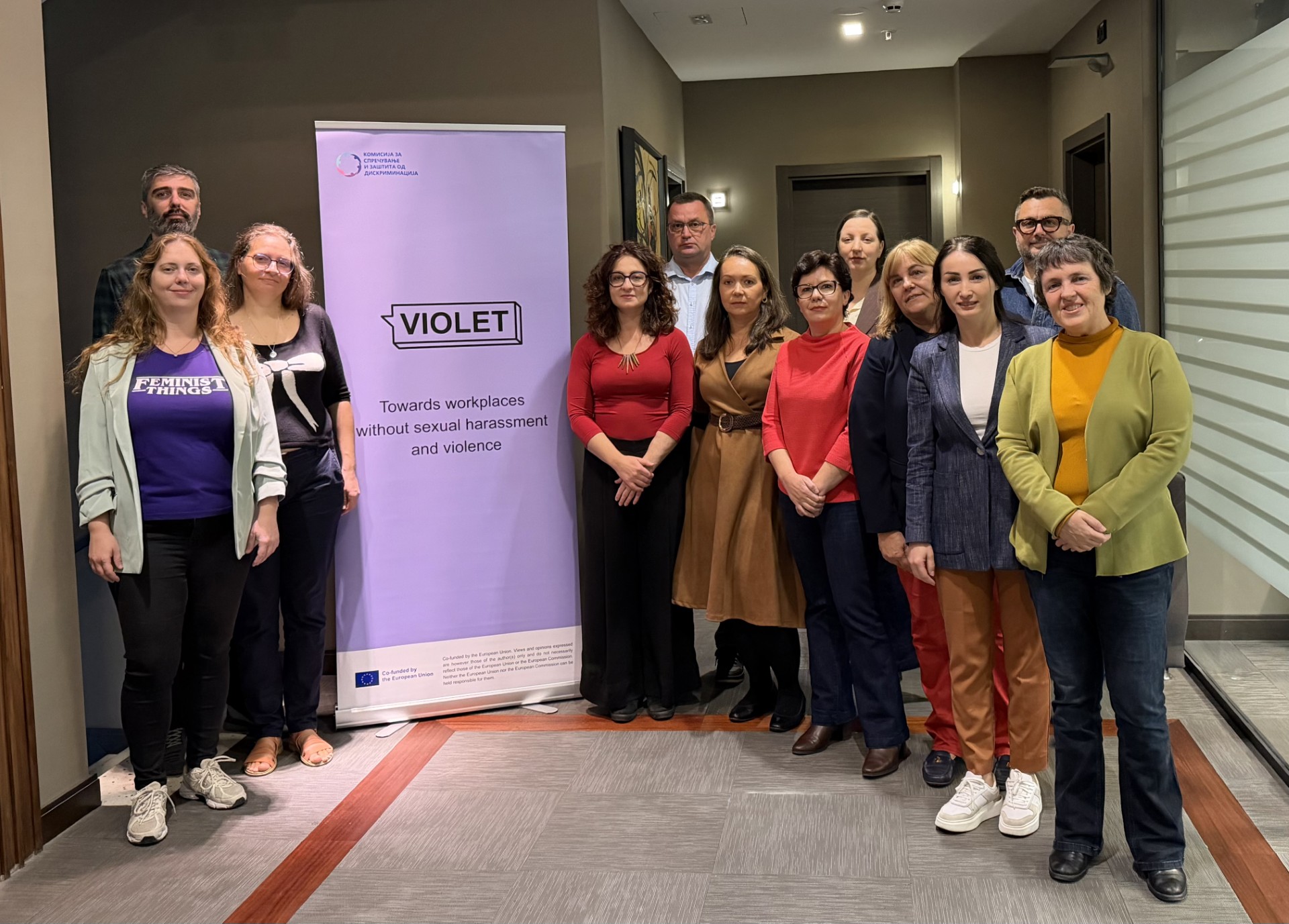
Komisioneri për Mbrojtjen nga Diskriminimi mori pjesë në mbledhjen e katërt të Komitetit Drejtues të Projektit VIOLET, të zhvilluar më 20–21 tetor 2026, në Shkup, Maqedonia e Veriut, me pjesëmarrjen e institucioneve partnere nga gjashtë vendet, Sllovakia, Republika Çeke, Lituania, Portugalia, Maqedonia e Veriut, Shqipëria dhe EQUINET.
Gjatë takimit, KMD prezantoi strategjinë e zbatimit të “Paketës së Punës 5” (WP5), “Institucione efektive për mbrojtjen e viktimave të ngacmimit seksual”, për të cilën Komisioneri për Mbrojtjen nga Diskriminimi ka rolin drejtues dhe koordinues ndërmjet partnerëve të projektit. Kjo paketë synon të forcojë efektivitetin e institucioneve në parandalimin dhe trajtimin e ngacmimit seksual në vendin e punës. Në këtë kuadër, KMD ka hartuar metodologjinë e përbashkët të punës, afatet e realizimit, formatet e raportimit dhe listën orientuese të institucioneve që do të përfshihen në monitorim.
Në kontekstin e Takimit të 4 të Komitetit Drejtues të Projektit VIOLET për implementimin e projektit VIOLET, shtetet anëtare të këtij projekti raportuan zhvillimet në lidhje me implementimin e aktiviteteve të angazhuara, duke ndarë çdo risi, vështirësi apo arritje gjatë fazës së implementimit.
During the meeting, the CPD presented the implementation strategy for Work Package 5 (WP5), “Effective Institutions for the Protection of Victims of Sexual Harassment,” for which the Commissioner for Protection from Discrimination has a leading and coordinating role among the project partners.
This work package aims to strengthen the effectiveness of institutions in preventing and addressing sexual harassment in the workplace. In this context, the CPD has developed a common working methodology, implementation timelines, reporting templates, and an indicative list of institutions to be included in the monitoring process.
During the fourth Project Steering Committee meeting, the participating countries reported on progress in implementing their respective project activities, sharing updates, challenges, and achievements encountered throughout the implementation phase.
Particular emphasis was placed on developing and defining the next steps and work plans, including setting specific deadlines, harmonising implementation procedures, and clearly assigning responsibilities to ensure the timely achievement of project objectives.
The project partners will conduct monitoring activities and consultations at the national level, the findings of which will contribute to the development of concrete recommendations aimed at improving institutional and legal protection mechanisms.